
Strategy Facilitator
How do you scale what works without losing what makes it work?
- COMPANY
- Business Consulting Agency (Anonymous)
- ROLE
- UX Researcher & End-to-End Designer
- YEAR
- 2023
The challenge wasn’t to digitize the workshop. It was to understand what made it work.
MKG’s strategy process depended on human facilitation. I used research to uncover the structure behind that value — then redesigned it as a system that could guide teams on its own.
MKG Strategy Facilitator
Digital strategy facilitation · SaaS
A self-guided product that helps marketing teams move through a consulting agency’s strategic marketing planning process — without a facilitator in the room.
- My Role
- Freelance UX DesignerEnd-to-end UX ownership
- The Work
- Research, experience architecture, product design, concept validation and usability testing
- Team
- Business consulting agency + product stakeholders
The Human Starting Point
From a real marketing challenge to a human solution that worked.
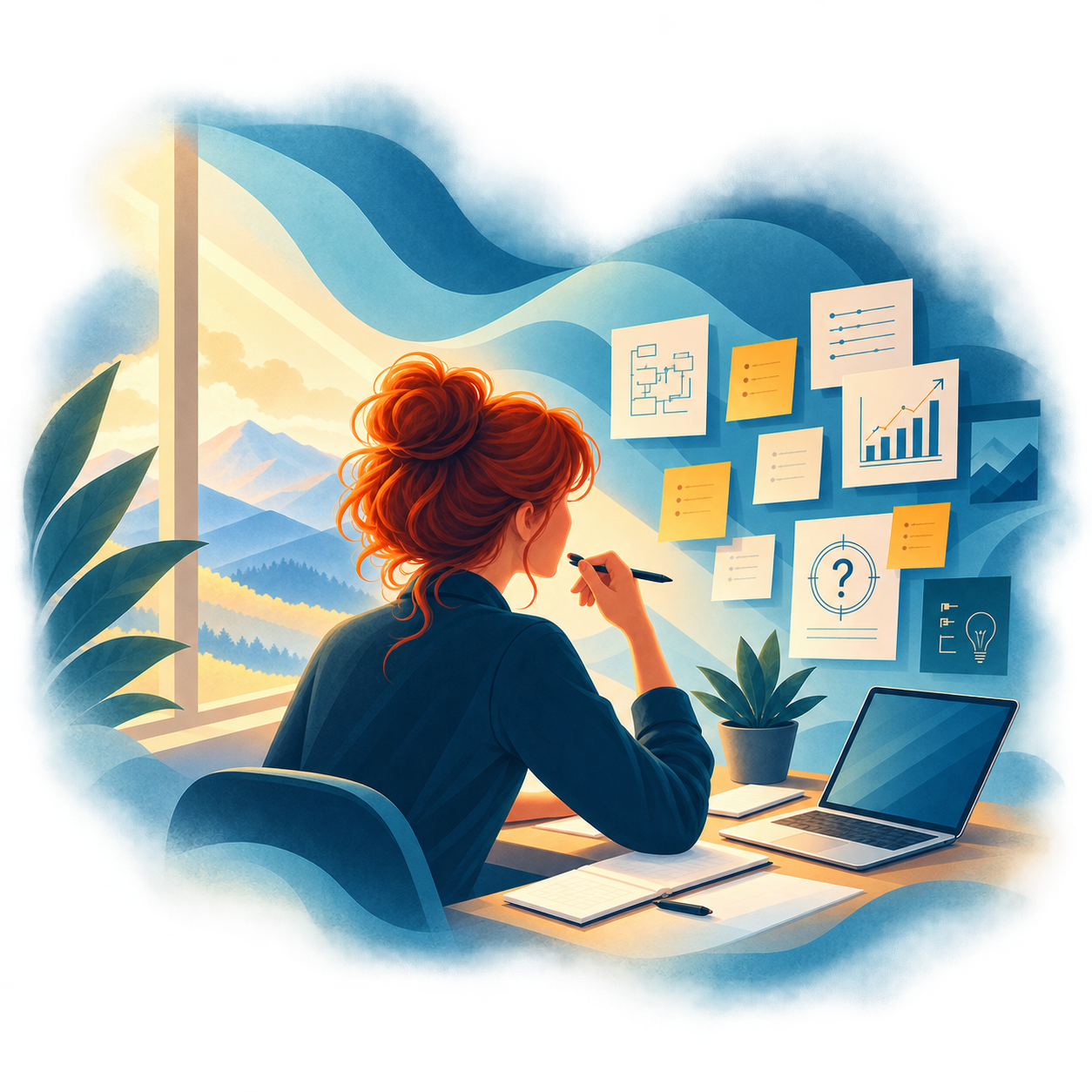
Imagine you’re leading marketing at a mid-sized company.
Your team has ideas. Leadership has expectations. Everyone sees a different priority.
But the strategy still isn’t coming together.
You found something that works
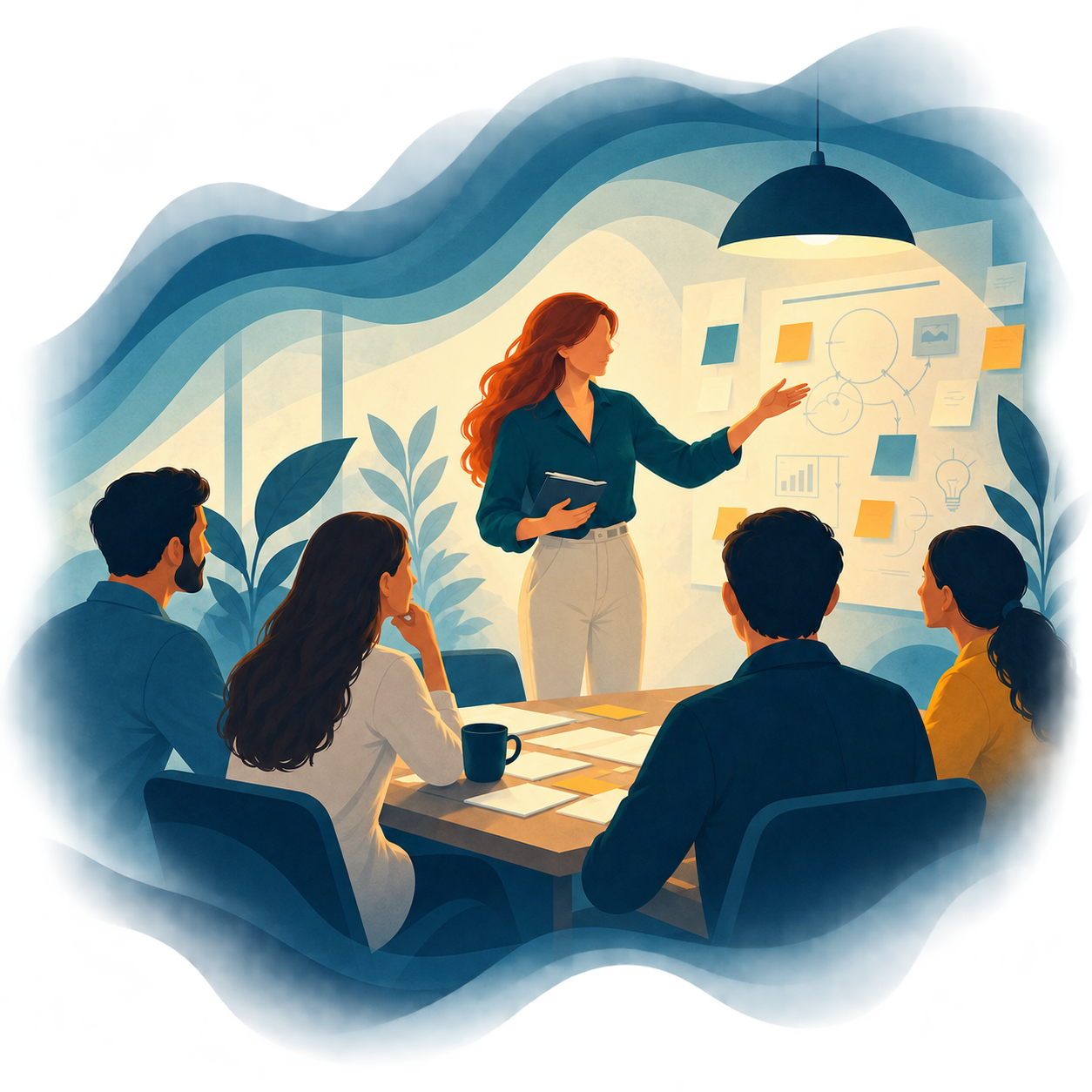
Then you find an agency that knows how to get teams aligned.
Through facilitated workshops, they turn scattered thinking into decisions, ownership and a shared plan.
And this is where my project begins
It worked. But it depended on the facilitator being in the room.
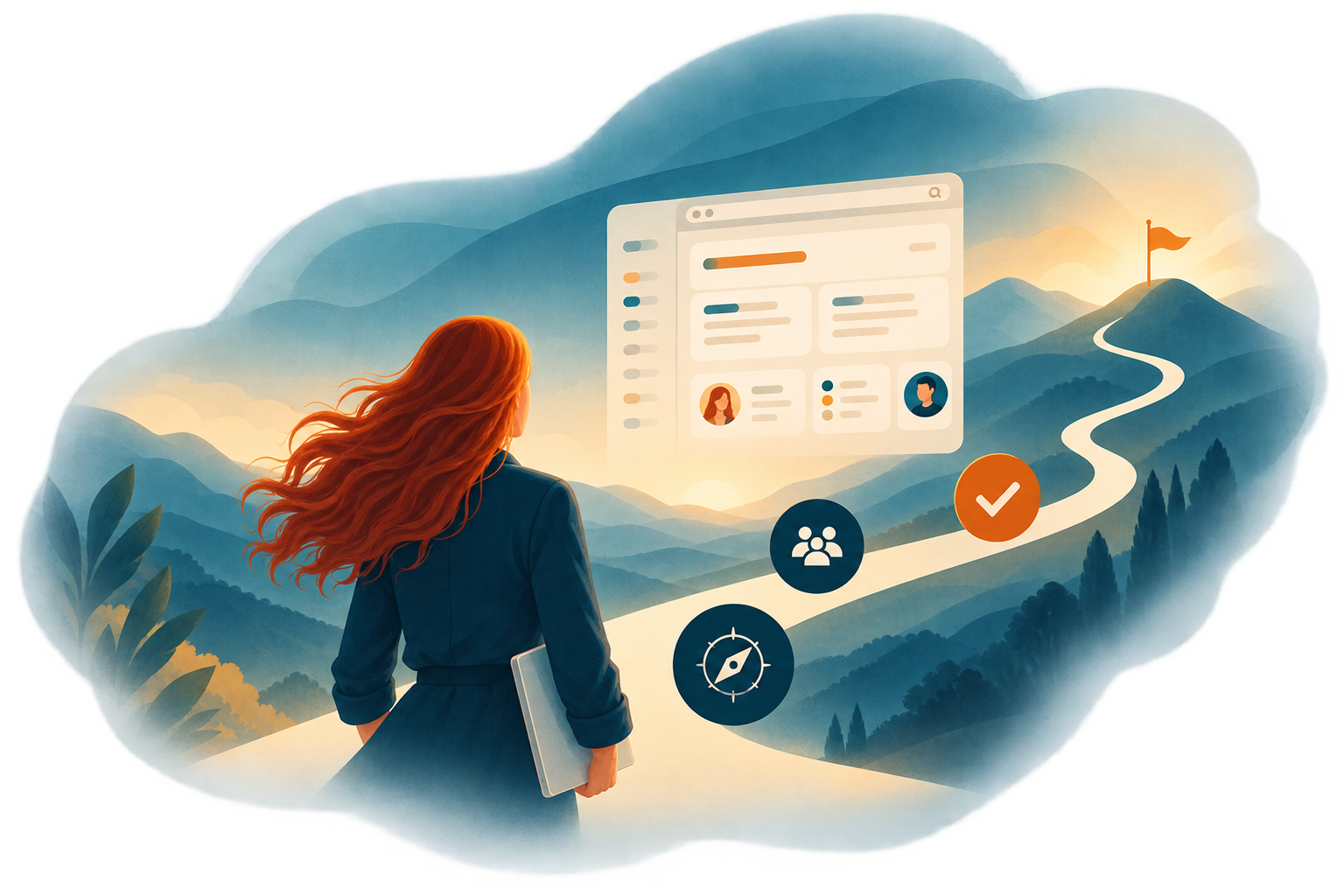
Could the same guidance
live inside a digital product?
That’s where I came in.
What the agency made possible
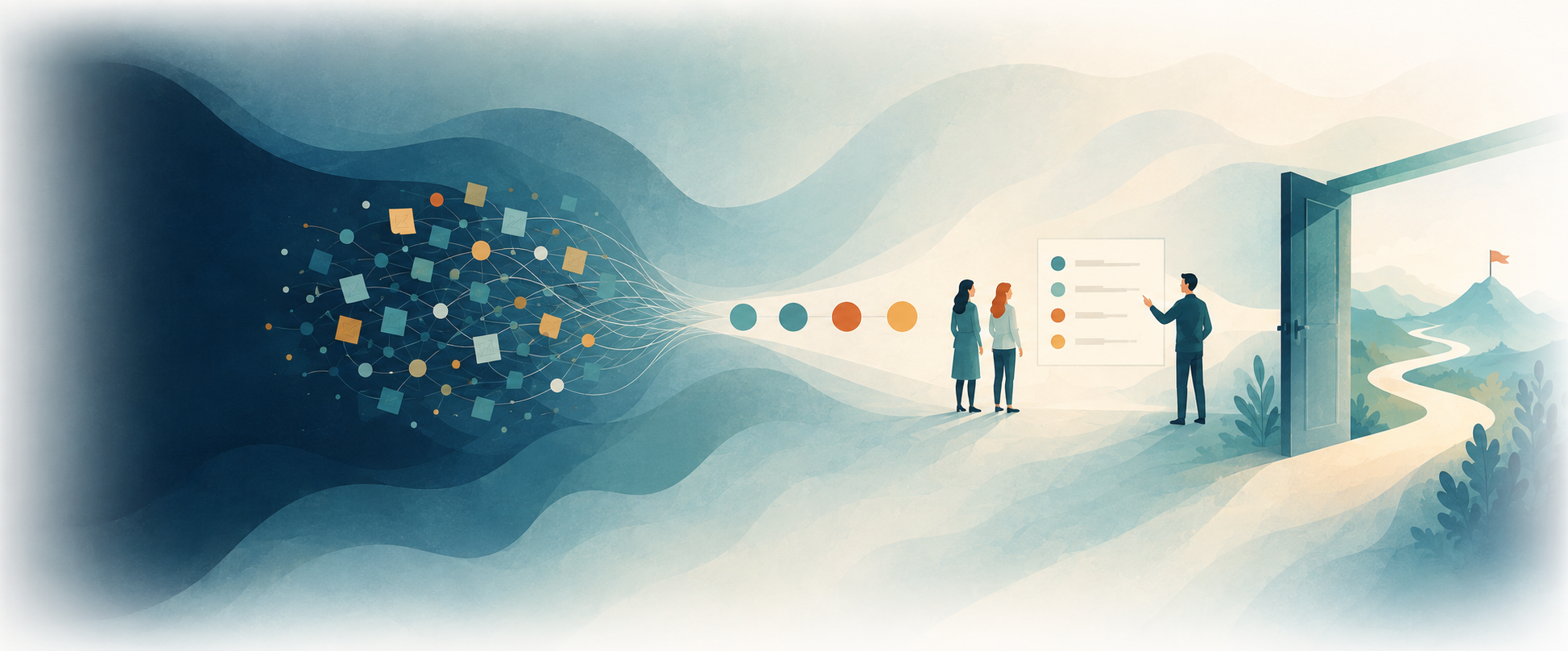
Help marketing leaders turn complex thinking into a strategy their teams can actually act on.
Align around one direction
Turn competing priorities into a shared view of what matters.
Turn thinking into a real strategy
Move from brainstorming to clear priorities, decisions and action.
Make ownership visible
Decide what to focus on, who owns what, and where resources should go.
Create a plan that can travel
Capture the strategy clearly enough to guide the team and communicate it to leadership.
The Agency’s Vision
“We know how powerful our facilitation process is but we need a way to put that power in our clients’ hands, even when we’re not in the room.”
WHERE WE ARE STARTING
The agency’s marketing strategy process was once fully hands-on: expert facilitators guided each client through collaborative, step-by-step strategy planning.
It worked but it didn’t scale.
WHAT WE AIM FOR
A scalable, digital tool that could replicate the personalized marketing strategy facilitation they provided to clients, reducing human intervention while maintaining the value of their hands-on consulting services.
How do you design guidance when the guide is no longer in the room?
What Had to Survive
Understanding the people and the value the digital experience needed to preserve.
Which parts of the human-led consulting experience created the most value — and therefore needed to carry into the digital product?
Agency knowledge
Stakeholder interviews + understanding the existing facilitation model
What the agency believed made the program effective.
Client reality
Past-client interviews + journey mapping
What people actually relied on, struggled with and valued.
Market context
Competitive research
What existing strategy tools already supported — and where facilitation was missing.
Two roles. One strategy.
Different responsibilities.
One builds the logic.
The other has to make it survive execution.



She needs to trust the logic.
She has to move from long-term vision to strategic choices and initiatives — even when the path between them isn’t obvious.
She needs a strategy she can believe in, explain, defend and align the team around.
Needs: Guidance through the thinking — not just a place to record the answer.
She needs to make that logic executable.
Once direction is set, she turns it into owners, timelines, resources, dependencies and visible progress — without losing why those choices were made.
She needs the team to know what matters, what happens next and how the pieces connect.
Needs: A bridge from strategic intent to coordinated execution — not another plan that dies after the workshop.
What we learned about the human experience —
and what that meant for the digital one.
The value wasn’t in running workshops. It was in the invisible guidance that made teams think clearly, decide with confidence, and keep moving forward.
- 01
Guidance extended beyond the room.
The facilitator helped teams understand where they were in the process, how to prepare, and what came next.
The product had to guide the entire journey.
It needed to support teams before, during and between workshops — not just replicate exercises inside a session.
01Guidance extended beyond the room.
The facilitator helped teams understand where they were in the process, how to prepare, and what came next.
The product had to guide the entire journey.
It needed to support teams before, during and between workshops — not just replicate exercises inside a session.
- 02
Structure only worked when teams could adapt it.
Teams needed a clear framework, but the ability to adjust it to their pace, priorities and reality.
The system had to provide direction, not a rigid process.
It needed to offer structure with flexibility — so teams could shape the journey without losing momentum.
02Structure only worked when teams could adapt it.
Teams needed a clear framework, but the ability to adjust it to their pace, priorities and reality.
The system had to provide direction, not a rigid process.
It needed to offer structure with flexibility — so teams could shape the journey without losing momentum.
- 03
Collaboration didn’t start in the workshop.
Hierarchy and group dynamics affected what people said in the room. Better thinking often happened individually first.
The experience had to combine individual thinking with shared discussions.
Personal preparation needed to inform and elevate group conversations.
03Collaboration didn’t start in the workshop.
Hierarchy and group dynamics affected what people said in the room. Better thinking often happened individually first.
The experience had to combine individual thinking with shared discussions.
Personal preparation needed to inform and elevate group conversations.
- 04
The facilitator carried decisions from one session to the next.
They kept track of what was decided, what was open, who owned what, and what should happen before the next meeting.
The product had to preserve continuity, ownership and progress.
Information, decisions and next steps needed to stay visible and actionable between sessions.
04The facilitator carried decisions from one session to the next.
They kept track of what was decided, what was open, who owned what, and what should happen before the next meeting.
The product had to preserve continuity, ownership and progress.
Information, decisions and next steps needed to stay visible and actionable between sessions.
- 05
Trust depended on adaptability.
Teams needed to feel the approach fit them — not the other way around.
Personalization and adjustable guidance were essential.
They weren’t nice-to-haves; they made the digital facilitator feel credible and relevant.
05Trust depended on adaptability.
Teams needed to feel the approach fit them — not the other way around.
Personalization and adjustable guidance were essential.
They weren’t nice-to-haves; they made the digital facilitator feel credible and relevant.
From Facilitation to System
Turning human guidance into product logic.
The answer was a guided journey.
The product had to carry teams through the entire strategy experience — from understanding the path, to preparing individually, working together, making decisions, and keeping the work moving between sessions.
- 1
Orient
Understand the journey, set up the plan, choose the right level of guidance.
- 2
Prepare
Gather context and complete individual thinking before the team meets.
- 3
Work together
Move through guided workshops and flexible shared workboards.
- 4
Decide
Turn discussion into agreed outputs, priorities and approvals.
- 5
Keep moving
Carry decisions into ownership, timelines, progress and the next stage.
Orient
Understand the journey, set up the plan, choose the right level of guidance.
Planning Process
See the whole journey before starting.
The full strategy path is visible upfront, including the stages, activities, and what each step is meant to accomplish.
Dashboard
Always know where you are and what comes next.
Current steps, progress, deadlines, notifications, and support keep the work oriented as the plan moves forward.
Guidance Settings
Choose the level of support that fits you.
Users can adjust how much guidance they receive based on their experience and confidence with strategic planning.
Prepare
Gather context and complete individual thinking before the team meets.
Facilitator
Pre-work Setup
Set up the work that prepares the team.
Define the individual work, clarify the questions people should think through, and give the team the context they need before the workshop begins.
Workshop Setup
Prepare the session before people arrive.
Plan the workshop, structure the time, connect the workboard, and make sure the session is ready to run smoothly.
Team Member
Preparation Dashboard
Show each participant how to come prepared.
Make the next step clear by showing what to review, what to prepare, how to join the workshop, and where the work fits in the plan.
Guided Individual Work
Turn preparation into better thinking.
Instructions, examples, and guiding questions help each participant contribute more thoughtful input before the group discussion starts.
Work together
Move through guided workshops and flexible shared workboards.
Shared Workboard
Give the team a shared space to think together.
Flexible workboards let participants contribute, organize, discuss, and shape the work collectively as the strategy develops.
Facilitation Support
Help the facilitator keep collaboration productive.
A live session guide combines activities, timing, facilitation instructions, and contextual tips to help create space for different voices, maintain focus, and move the discussion forward.
Decide
Turn discussion into agreed outputs, priorities and approvals.
Prioritized Planning
Turn decisions into a plan people can act on.
The system connects strategic decisions to objectives and projects, making priorities, ownership, timing, and execution details visible.
Review and Approval
Turn workshop outputs into decisions people can review and approve.
After the workshop, teams can share outputs, request feedback, and ask for approval so decisions move forward with visibility and alignment.
Keep moving
Carry decisions into ownership, timelines, progress and the next stage.
Progress & Next Actions
Keep the next move visible.
Progress, upcoming work, deadlines, and recommendations help teams carry the strategy forward instead of losing momentum between sessions.
Timeline & Ownership
Turn the plan into work that keeps moving.
A shared timeline connects strategic work with tasks, timing, and ongoing responsibilities so the plan stays active beyond each workshop.
Testing the Translation
Seeing whether the value survived the change in form.
Did the value survive the move to digital?
Two rounds of testing helped reveal whether the guided experience still worked without the facilitator in the room — and where the translation needed refinement.
How we tested
- 01PlanPre-planned test scripts
- 02TestScreen & face recording
- 03AnalyzeWritten + verbal questionnaires
- 04IterateImprovements between rounds
- 05ReportClear priorities
Observed, not just asked.
Participants completed the experience independently while screen and face recordings captured behavior, hesitation, and expectations.
What we needed to validate
Concept Validation
Would users understand the value, trust the idea, and believe the tool could support their way of working?
Usability Validation
Would the structure, guidance, and flow help users move through the experience with confidence?
What testing revealed
Concept Testing
The concept made sense. Adaptability determined trust.
- Purpose and core value were understood
- Personalization increased relevance
- Text-heavy onboarding created friction
- Collaboration needed clearer explanation
- Users wanted confidence the tool could fit their existing process
Usability Testing
Guidance increased confidence. Density slowed people down.
- Milestones created a stronger sense of direction
- The guided journey supported navigation confidence
- Repeated and lengthy text slowed progress
- Time management stood out as especially valuable
- First-use explanation needed refinement
What changed
Testing clarified what was working, where the translation weakened, and what deserved investment next.
- 01
Adoption confidence improved after iteration.
Refinements made the experience easier to understand and strengthened willingness to use it.
- 02
Core product concepts were validated.
Teams saw value in a guided, adaptable way to move through strategic planning.
- 03
Time management emerged as a high-value differentiator.
Its value helped confirm an important product direction and focus roadmap priorities.
“Can I see the full final experience?”
I wish.
Much of this work belongs to my client and can’t be shared publicly. What I can show here is part of the process, systems, and decisions behind it.
If you’d like to go deeper, I’m happy to walk through what I can share privately.
Let’s talk →